
"Yunnan green beans"
700 article(s) found

Introduction of Coffee producing areas in China the cultivation of fine coffee beans from Yunnan
We often meet boastful people in coffee growing areas in Yunnan: our Yunnan coffee is delicious, our Yunnan coffee has won awards in the world, and our Yunnan coffee is very famous and delicious in the world. I asked them if they had had a drink. Where is it good? I can't answer. Many curry farmers mix 15% to 20% green fruit in red fruit. Can this kind of coffee taste good? This kind of coffee is only roasted.

Analysis of Chinese Coffee quality and grading of Yunnan Coffee
Yunnan coffee specific quality: raw coffee bean appearance requirements: the color should be light blue or light green, with luster, fresh smell, no sour and odor and other peculiar smell, round or oval. Coffee rice classification: with screening extension, machine sieve, sieve hole 6.5, 6.0, 5.5, 5.0 mm is divided into five levels, each level has a standard sample, which is the lowest standard sample. Level I: above 6.5mm
The Green Dream of Yunnan Coffee
In 2012, Yunnan is expected to produce 60, 000 tons of coffee, accounting for 98% of the country's coffee production and 7/1000 of the world's coffee production. Pu'er City, as an important producing area of small grain coffee in Yunnan, by the end of 2011, the planting area of coffee is 439000 mu, the output is 28000 tons, the output value is 850 million yuan, the planting area and output account for more than half of the country respectively. This year, new plants will be planted in Pu'er City.
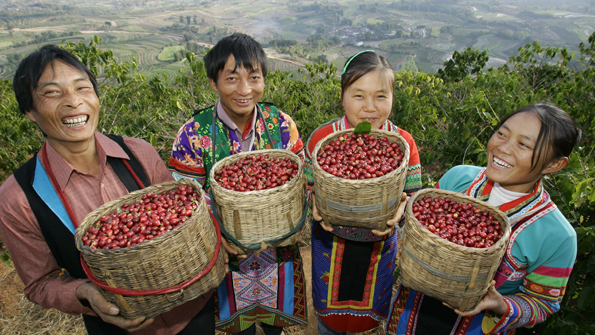
The green dream of Yunnan coffee is the only way to take intensive processing, and join the competition of international coffee giants.
Yunnan coffee was planted on a large scale in the mid-1950s, with a planting scale of 4000 hectares at one time. By the end of 1997, the planting area of coffee in the province had reached 7800 hectares. At present, the planting area of the province accounts for 70% of the national area, and the output accounts for 83% of the whole country. Yunnan coffee has established the dominant position in China in terms of planting area and coffee bean production. At present, Pu'er City is still there.

Introduction to the characteristics of grindability of Bobang coffee beans grown in Yunnan by describing the flavor of small grains
Yunnan Coffee Bean introduces two classic high-quality coffee varieties, Typica and Bourbon, which are the main cultivated varieties in Yunnan. In 1991, Katimo Catimor series varieties were introduced from Kenya (with stronger anti-virus ability and higher yield). A variety of Arabian species (also known as small seed species). Because the morphology and habits of the two varieties are similar, the two
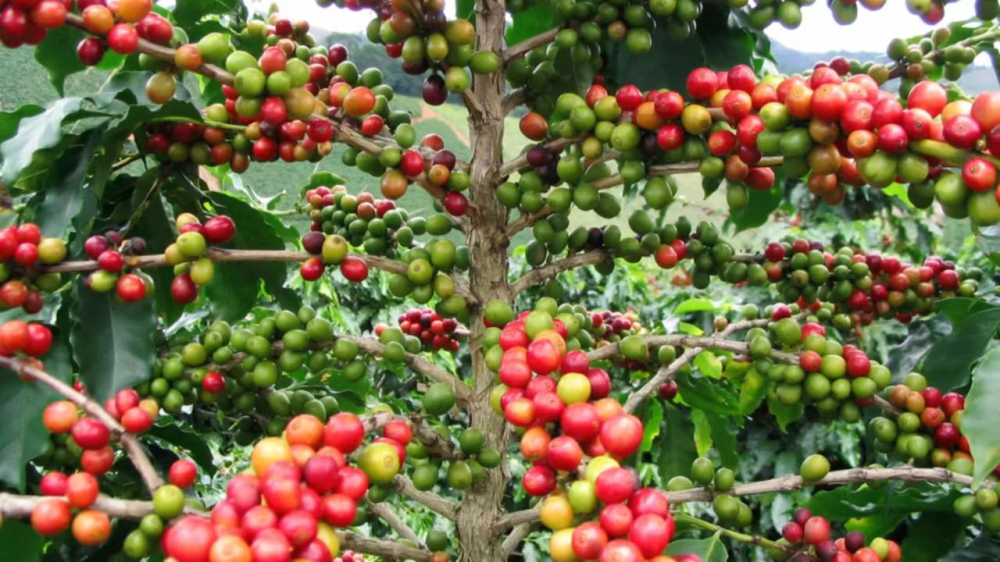
Introduction to the Grade characteristics of Katim Coffee varieties description of flavor and taste of Yunnan Katim coffee beans
Katim small seed coffee, belongs to Katim high generation variety, medium dwarf plant, vigorous growth, stable secondary characters, crown top bud tender leaves emerald green, whole leaf color dark green, plant shape columnar, short internodes, many branches, exuberant growth, wide adaptability, strong drought resistance, a certain degree of cold resistance, under medium management level.
Quality and grading of Coffee in Yunnan
Yunnan coffee specific quality: raw coffee bean appearance requirements: the color should be light blue or light green, with luster, fresh smell, no sour and odor and other peculiar smell, round or oval.
Coffee beans Coffee varieties Yunnan Arabica coffee
Yunnan is China's main coffee producing area. Yunnan is located in the subtropical mountain climate zone south of the Tropic of Cancer, with unique plateau red soil, fertile loose soil, mild climate, especially suitable for planting small coffee species. Yunnan coffee was first introduced by French missionaries in 1902. Up to now, 24 coffee trees with more than 90 years old still grow in Zhukula Township, Binchuan County. 1914 Ruili Jing

Yunnan coffee bean flavor description grinding scale variety production area treatment method taste introduction
Yunnan coffee bean flavor description grinding scale variety production area treatment method taste introduction Tibika coffee is native to Ethiopia and southeastern Sudan and is the most widely cultivated variety of coffee in the Western Hemisphere. The plant is stronger, but not light-tolerant, and the yield is higher in Hawaii. The top leaf of Tibika is red and copper, which is called red top coffee. Bourbon coffee is a variety of small-grain coffee second only to Tibica. Master

Yunnan Coffee Price details A New Round of quotation for Yunnan Coffee
Professional coffee knowledge exchange more coffee bean information Please follow the coffee workshop (Wechat official account cafe_style) is another year's harvest season, Yunnan coffee is generally a bumper harvest. The fresh fruit of red and green Katim coffee hangs all over the branches, and coffee enters the harvest season in Yunnan at the end of November. According to the report of Industrial and Economic observation, the income of Yunnan farmers has decreased year by year, and the price this year is about 30% lower than that of the same period last year.
Upgrading of coffee industry in Yunnan
Fresh red and green fruits hang all over the branches, and peeled green beans can be seen everywhere in the farmyard, which is being baked in the warm winter sun. In Yunnan at the end of November, coffee entered the harvest season.

Yunnan Coffee producing area in China the difference between the flavor characteristics of Yunnan small-grain coffee Katim and iron pickup
Professional coffee knowledge exchange more coffee bean information please follow the coffee workshop (Wechat official account cafe_style) Yunnan is located in the subtropical mountain climate zone south of the Tropic of Cancer, with a unique plateau red soil, fertile and loose soil, mild climate, especially suitable for growing Arabian coffee beans. The climate here is pleasant and belongs to the hot monsoon climate zone of South Asia, with low latitude, high temperature, rainy,

Description characteristics of Yunnan Coffee Bean Catimor,Bourbon,Typica small Coffee Brand Flavor
Yunnan coffee flavor description Zhu Kula is poor and backward, but it is a place with an inextricable bond with coffee. In addition to growing coffee all over the country, the villagers all have a tradition of drinking coffee: self-growing, self-grinding and self-brewing, and now men, women and children in the village have the habit of drinking coffee. The villagers here have a special affection for coffee trees, even if the coffee beans do not bring them any responsibility.

The income of Yunnan farmers is decreasing year by year. The plight of Yunnan small-grain coffee, please cherish every cup of coffee.
Professional coffee knowledge exchange more coffee bean information Please follow the coffee workshop (Wechat official account cafe_style) is another year's harvest season, Yunnan coffee is generally a bumper harvest. Fresh red and green fruits hang all over the branches, and coffee enters the harvest season in Yunnan at the end of November. According to the report of Industry and Economic observation, the income of Yunnan farmers has decreased year by year, and the price this year is about 30% lower than that of the same period last year. Kanongle
Yunnan Rosa Coffee Taste and Flavor description method when and where did the variety characteristics start to be planted?
Typica and Bourbon, two classic high-quality coffee varieties, are the main coffee varieties in Yunnan. In 1991, Katimo Catimor series varieties were introduced from Kenya (with stronger anti-virus ability and higher yield). Arabian species (also known as small grain species)

A brief introduction to the treatment method of Grinding degree and Baking degree of Yunnan Katim Fine Coffee beans
Catimor: Katim is not pure Arabica blood, it is a hybrid of Timor (which belongs to Robusta) and caturra (a variety of Bobang), so catimor has 25% Robusta blood, and its Robusta blood also determines its taste defects: the aroma is not rich enough, and the overall taste is bitter, and it is prone to astringency and irritation.
Fine Coffee-Yunnan small Coffee
Yunnan is the main coffee bean producing area in China. Yunnan is located in the subtropical mountain climate zone south of the Tropic of Cancer, with unique plateau red soil, fertile and loose soil and mild climate, which is especially suitable for growing small-grain coffee. Yunnan coffee was first introduced by French missionaries in 1902. Up to now, there are still 24 coffee trees with more than 90 years old in Zhukula Township, Binchuan County. Rui Lijing, 1914
The History of Coffee Culture and the Centennial memory of Yunnan Coffee
A hundred years ago, when the French missionary Tian Deneng planted a coffee tree seedling on the land of Jukula, a small mountain village, China has been destined for coffee ever since. In Binchuan County, Dali City, Yunnan Province, there is a hidden mountain village, the whole village is covered by a piece of green trees, you will find that these green trees are almost all coffee trees. Through the surrounded coffee forest, you can walk into the village.

Characteristics of Katim species in Yunnan
Following caf é comments (official Wechat account vdailycom) found that the Cafe Beautiful Cafe opened a small shop of its own characteristics of Yunnan Katim species with the in-depth development of Yunnan coffee industry, the rising demand of the domestic coffee market and the efforts of the government and enterprises, Yunnan coffee will certainly usher in a new period of development. Bourbon (bourbon): this variety is derived from the iron pickup and was created by the French.

Introduction to the Flavor description method of Coffee Development History in Yunnan Province
Yunnan Coffee Development History Flavor description treatment Variety characteristics Grinding scale introduction of Yunnan Coffee Typica and Bourbon these two classic high-quality coffee varieties are the main cultivated varieties in Yunnan. In 1991, Katimo Catimor series varieties were introduced from Kenya (stronger anti-virus ability, higher yield). The variation of Arabian species (also known as small-grained species)